

Introduction
The global electric toothbrush market is heavily dominated by two rival technologies: Sonic and Oscillating-Rotating designs. While both clear away significantly more plaque than traditional manual brushing, they operate on vastly different mechanical principles, motion patterns, and levels of soft-tissue gentleness.
For health-conscious consumers—particularly those managing sensitive gums, thinning enamel, receding gum lines, or shopping for young children—making the wrong choice can lead to micro-scratches and recurring bleeding.
Backed by clinical dental research and fluid dynamics, this comprehensive guide deconstructs the core differences between sonic and oscillating technologies. We will evaluate their performance regarding plaque removal, enamel preservation, and gum comfort to help you make an informed investment for your family’s oral health.

1. How Do Sonic and Oscillating Toothbrushes Work?
Understanding the underlying physics of these devices is key to choosing the right level of protection.
1.1 Sonic Electric Toothbrushes
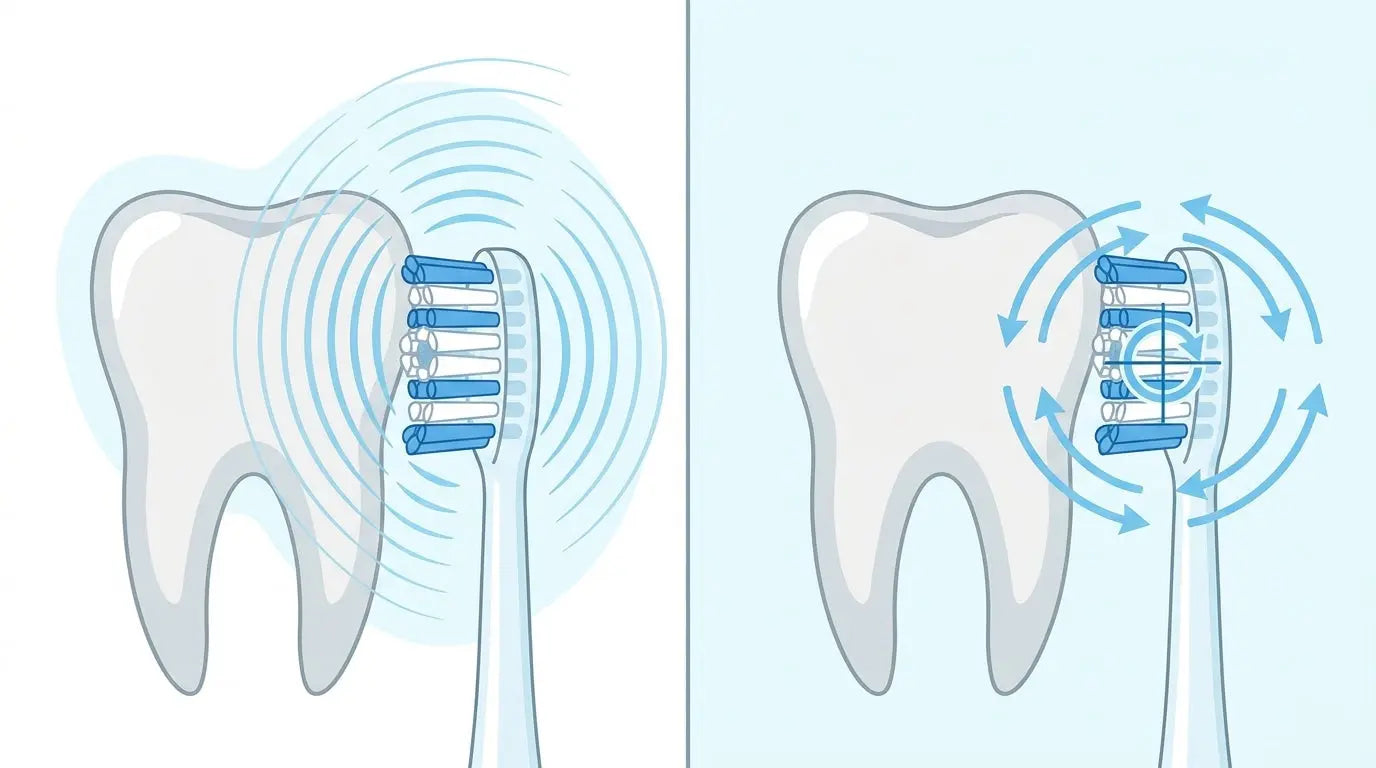
Sonic toothbrushes utilize high-frequency, linear (side-to-side) vibrations. Rather than relying purely on mechanical bristle scrubbing, their extreme speeds generate Dynamic Fluid Action. This acoustic energy creates microscopic bubbles in your saliva, throwing fluid deep into the narrow interdental gaps and beneath the gum line, disrupting plaque even where the bristles cannot physically touch.
1.2 Oscillating-Rotating Toothbrushes
Oscillating toothbrushes feature a distinct round brush head that spins, pulsates, and sweeps back and forth at rapid intervals. Their cleaning methodology relies almost entirely on direct mechanical friction. While this targeted mechanical scrubbing is highly effective at scraping off stubborn surface grit, its high-intensity friction can overstimulate and batter delicate or inflamed oral tissues.

2. Head-to-Head Performance Comparison
To safeguard non-renewable tooth enamel and vulnerable gingival margins, let's examine how these two mechanisms perform under clinical scrutiny:
表格
| Care Dimension | Sonic Technology | Oscillating-Rotating |
|---|---|---|
| Enamel Safety | Excellent. Fluid dynamics minimize direct abrasive friction, keeping enamel safe from micro-scratches. | Moderate. Heavy mechanical contact poses a higher risk of abrasion if paired with aggressive hand pressure. |
| Gum Gentleness | Superior. Non-contact sweeping waves clean safely along the sulcus without triggering redness or bleeding. | Aggressive. The rapid twisting motion can rub against swollen gum edges, occasionally causing discomfort. |
| Plaque Disruption | Deep Interdental Reach. Excels at cleaning deep gaps, tight tooth alignments, and gum pockets. | Surface Polishing. Excels at lifting stubborn surface stains (coffee/tea) on flat tooth surfaces. |
3. The Best of Both Worlds: The Hybrid Revolution
Historically, consumers had to compromise: choose sonic for gentleness, or choose oscillating for surface stain removal. Today, advanced oral engineering has birthed a Hybrid Design that fuses the sweeping safety of sonic waves with the meticulous precision of localized oscillation.
🏆 The Industry Standout:
The RANVOO AirJet X5 Electric Toothbrush represents this ideal hybrid balance. It runs at a clinically validated frequency of 22,000 strokes per minute—positioning it perfectly within the golden window for safe gum care. Simultaneously, it introduces a calibrated 12° precise oscillation amplitude.
By marrying micro-sonic vibrations with a controlled, measured swing, the AirJet X5 clears heavy surface plaque and hidden interdental debris simultaneously, completely eliminating the harsh mechanical trauma that triggers gum recession and enamel thinning.

4. Which Technology Fits Your Profile Best?
4.1 Best for Sensitive, Bleeding Gums or Receding Gum Lines
Top Choice: Sonic or Hybrid Models
Why: Swollen or compromised gingival tissues require a touchless approach. The RANVOO AirJet X5 features 4 responsive cleaning modes, including an ultra-gentle setting, paired with premium, feather-soft DuPont filaments that glide over inflamed areas without causing pain or red foam in the sink.
4.2 Best for Thin, Fragile, or Weakened Enamel
Top Choice: Sonic or Hybrid Models
Why: Once enamel is scraped away, it is gone forever. Pure oscillating brushes with uncalibrated heavy rotation speeds can act like polishing compounds on soft teeth. A hybrid model protects the structural integrity of your enamel by reducing physical friction.
4.3 Best for Young Children (Ages 3–12)
Top Choice: Sonic or Hybrid Kids' Modes
Why: Developing pediatric enamel is noticeably softer and less mineralized than adult teeth. The aggressive mechanical twisting of heavy oscillating brushes can frighten children or cause pain. A low-frequency sonic or hybrid sweep is highly recommended.
4.4 Best for Coffee/Tea Stains & Smokers' Plaque
Top Choice: Hybrid Models
Why: While pure oscillating brushes polish flat surfaces well, a hybrid brush provides the necessary scrubbing power for surface stains while utilizing sonic waves to ensure the hard-to-reach interdental spaces aren't neglected.
5. Pro-Care Tips to Maximize Oral Protection
Regardless of your chosen mechanism, human technique dictates long-term safety:
Zero Manual Scrubbing: Do not saw back and forth. Place the brush head gently at a 45-degree angle against the tooth and slowly glide it along the arc. Let the internal motor do 100% of the kinetic work.
The 3-Month Deadline: Worn, frayed bristles lose their flexibility, turning soft fibers into stiff, jagged needles that scratch enamel and pierce gums (Walsh et al., 2017).
Ensure Sterile Hardware: Bacteria buildup in hidden crevices can cause localized gum infections. The RANVOO AirJet X5 addresses this environmental risk with a premium nano-silicon anti-mold coating and IPX7 waterproofing, preventing bathroom moisture from contaminating your routine.
6. Common Myths Debunked
❌ Myth 1: Sonic toothbrushes are too gentle to remove tough tartar.
Fact: Tartar (calculus) can only be removed by a dentist. However, when it comes to soft, sticky plaque, sonic fluid dynamics are highly efficient at disrupting it before it hardens into tartar.
❌ Myth 2: All oscillating brushes will eventually destroy your gums.
Fact: Incorrect. Individuals with fully mature, perfectly healthy gums can use standard oscillating brushes safely. They simply become high-risk tools when applied to sensitive, bleeding, or structurally thin oral profiles.
❌ Myth 3: High speed is the only metric that defines a clean mouth.
Fact: Unregulated, ultra-high vibration speeds create dangerous friction. True cleaning efficacy relies on a calculated combination of stable speed, precise bristle angling, and proper bristle rounding.
Conclusion
If your primary oral care goals revolve around gum protection, enamel preservation, and preventing sensitivity, Sonic and Hybrid systems are the scientifically superior choices. They drastically lower mechanical abrasion while keeping your teeth comprehensively clean.
Protecting your smile shouldn’t force you to choose between deep stain removal and tissue safety. Experience a flawlessly engineered, comprehensive clean with the RANVOO AirJet X5 Electric Toothbrush—meticulously optimized with a 12° oscillation sweep and 22,000 strokes/min sonic frequency to deliver the ultimate enamel-safe, gum-loving brushing experience.
References
Walsh, T., et al. (2017). Effect of bristle wear on plaque removal efficacy of powered toothbrushes. Journal of Dental Research.
Saxer, U. P., et al. (2021). Comparative clinical study of sonic vs oscillating toothbrushes on gingival health. Journal of Dental Hygiene.
West, N. X., et al. (2019). Enamel abrasion levels of different powered toothbrush technologies. Clinical Oral Investigations.